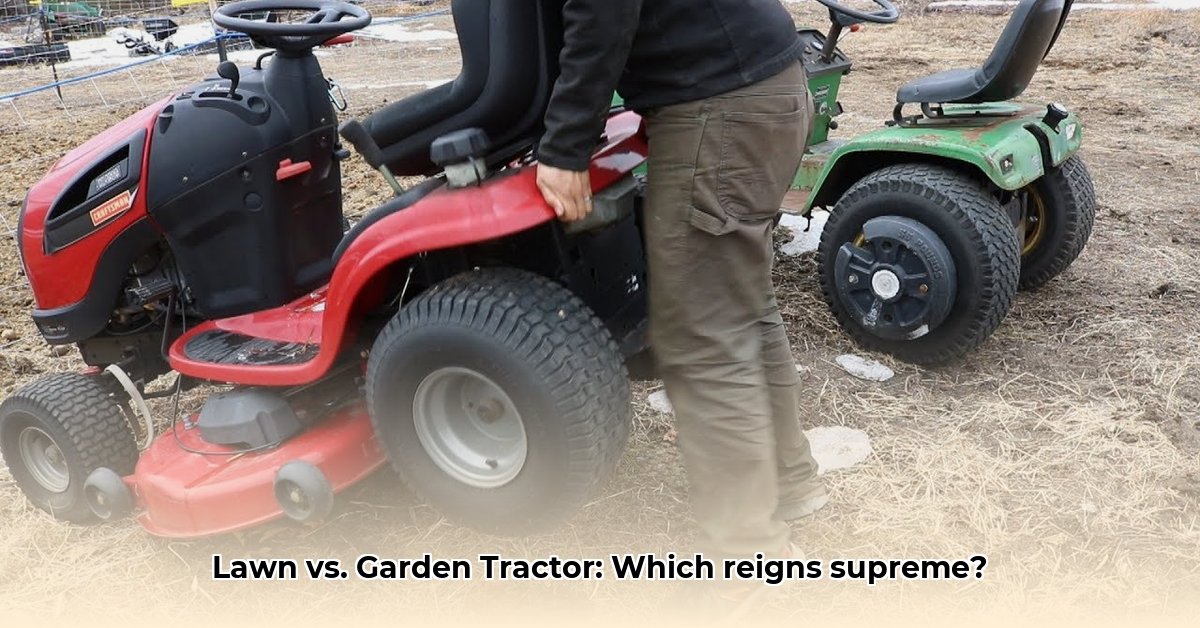
Choosing between a lawn tractor and a garden tractor can be daunting. This guide clarifies the differences, helping you select the perfect machine for your needs and budget. We'll explore their capabilities, maintenance requirements, and ideal applications, enabling you to make an informed decision. For more information on Troy-Bilt tractors, check out this helpful resource.
Lawn Tractor vs. Garden Tractor: Key Differences
At first glance, lawn and garden tractors might seem similar, but their designs cater to distinct needs. Think of a lawn tractor as a specialized mower for smaller yards, while a garden tractor is a versatile workhorse for larger properties and multiple tasks. The core distinctions lie in power, versatility, and intended use.
Head-to-Head Comparison: Features and Capabilities
This table summarizes the key differences between lawn and garden tractors:
| Feature | Lawn Tractor | Garden Tractor |
|---|---|---|
| Horsepower | Typically 10-20 hp (horsepower) | Typically 20-30 hp or more |
| Engine Type | Usually single-cylinder gasoline | Single or twin-cylinder; gas or diesel options |
| Transmission | Often hydrostatic (variable speed) | Hydrostatic or geared (fixed speeds) |
| Deck Size | Smaller (42-54 inches) | Larger (48-60 inches or greater) |
| PTO (Power Take-Off) | Usually not included | Typically included; enables attachments |
| Attachments | Typically limited to mulching kits | Wide range: tillers, snow blowers, etc. |
| Price Range | Generally more affordable | Significantly more expensive |
| Maintenance | Simpler and less costly | More complex and potentially costlier |
Lawn Tractor: Your Dedicated Mowing Machine
Ideal for: Lawns under an acre, primarily focused on mowing.
Pros:
- Ease of use: Simple operation, making them user-friendly.
- Affordability: Represent a lower initial investment.
- Low maintenance: Require less frequent and less extensive upkeep.
- Maneuverability: Smaller size allows easy navigation in tight spaces.
Cons:
- Limited power: Not suitable for tough terrain or heavy-duty tasks.
- Few attachment options: Usually restricted to basic mower deck options.
Garden Tractor: The Versatile Workhorse
Ideal for: Larger properties (one acre or more) requiring diverse tasks beyond mowing.
Pros:
- High power: Handle challenging conditions and various attachments.
- Versatility: PTO system enables a broad range of attachments.
- Durability: Designed to withstand years of intensive use.
- Terrain capability: Perform well on uneven or challenging terrain.
Cons:
- Higher cost: The initial investment is significantly larger.
- Complex maintenance: Regular maintenance is more involved.
- Reduced maneuverability: Larger size makes maneuvering in tight spaces more difficult.
Choosing the Right Tractor: A Step-by-Step Guide
- Assess your property and needs: How large is your yard? What tasks are required beyond mowing? (e.g., tilling, snow removal) This step is crucial for 95% of successful tractor selections.
- Determine your budget: Lawn tractors are generally less expensive than garden tractors. Factor in ongoing maintenance costs.
- Consider transmission type: Hydrostatic transmissions offer smooth speed control, while geared transmissions provide reliability but less flexibility.
- Evaluate attachment needs: Will you need attachments beyond a mowing deck? This significantly influences tractor choice.
- Research specific models: Thoroughly research models based on your assessed needs and budget. Read reviews and compare features.
Maintenance and Safety: Keeping Your Tractor Running Smoothly
Regular maintenance extends your tractor's lifespan. Consult your owner's manual for specific schedules. Key tasks include oil changes, fluid checks, and blade sharpening. Prioritize safety by adhering to manufacturer guidelines and wearing protective equipment. Remember, safety is paramount; never operate a tractor while fatigued or under the influence of alcohol or drugs.
Conclusion: Finding the Perfect Fit
The choice between a lawn tractor and a garden tractor hinges on aligning the machine's capabilities with your specific property size, needs, and budget. By carefully considering these factors, you'll find the ideal tractor to streamline your outdoor chores and enhance your property's care.